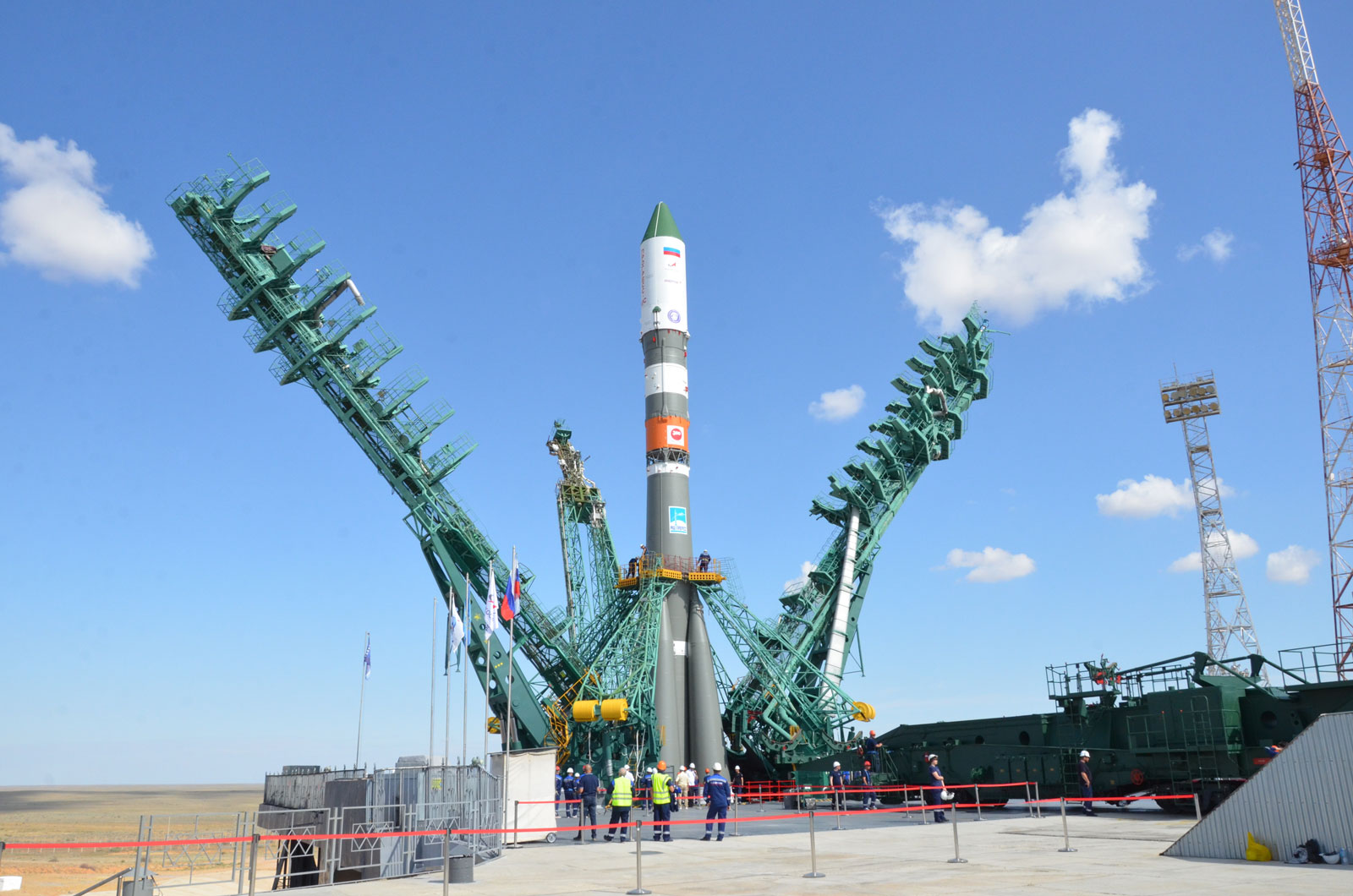
Soyuz 2.1a
ActiveProgress Rocket Space Center (PRSC)
Nov. 4, 2004
Description
The Soyuz 2.1A converted the flight control system from analog to digital, which allowed launch from fixed platforms. It also allowed big fairings and payloads. It is currently used for crewed Soyuz and Progress flights to the ISS.
Specifications
-
Minimum Stage
2 -
Max Stage
3 -
Length
46.3 m -
Diameter
2.95 m -
Fairing Diameter
― -
Launch Mass
312.0 T -
Thrust
4149.0 kN
Family
-
Name
Soyuz 2.1a -
Family
― -
Variant
― -
Alias
― -
Full Name
Soyuz 2.1a
Payload Capacity
-
Launch Cost
$80000000 -
Low Earth Orbit
7020.0 kg -
Geostationary Transfer
Orbit
2810.0 kg -
Direct Geostationary
― -
Sun-Synchronous Capacity
4230.0 kg
Progress Rocket Space Center
Commercial
CEO: Dmitry Baranov
PRSC 1996Progress Rocket Space Centre, formerly known as TsSKB-Progress, is a space science and aerospace research company which is known for manufacturing launch vehicles and satellites. Most notably, Progress Rocket Space Centre is the manufacturer of Soyuz launch vehicles.
Upcoming Spaceflights
Soyuz 2.1a | Soyuz MS-30
Progress Rocket Space Center | RussiaBaikonur Cosmodrome, Republic of Kazakhstan
Status: To Be Determined
Mission:
Soyuz MS-30 will carry two cosmonauts and one astronaut to the International Space Station aboard the Soyuz spacecraft from the Baikonur Cosmodrome in Kazakhstan. The crew consists of Roscosmos cosmonauts Dmitri Petelin and Konstantin Borisov, as well as NASA astronaut Deniz Burnham.
Low Earth OrbitSoyuz 2.1a | Soyuz MS-29
Progress Rocket Space Center | RussiaBaikonur Cosmodrome, Republic of Kazakhstan
Status: Launch Successful
Mission:
Soyuz MS-29 will carry two cosmonauts and one astronaut to the International Space Station aboard the Soyuz spacecraft from the Baikonur Cosmodrome in Kazakhstan. The crew consists of Roscosmos cosmonauts Pyotr Dubrov and Anna Kikina, as well as NASA astronaut Anil Menon.
Low Earth OrbitSoyuz 2.1a | Progress MS-34 (95P)
Progress Rocket Space Center | RussiaBaikonur Cosmodrome, Republic of Kazakhstan

Soyuz 2.1a | Progress MS-33 (94P)
Progress Rocket Space Center | RussiaBaikonur Cosmodrome, Republic of Kazakhstan
Soyuz 2.1a | Obzor-R No.1
Progress Rocket Space Center | RussiaPlesetsk Cosmodrome, Russian Federation
Status: Launch Successful
Mission:
The Russian Obzor-R satellite is a planned X-band radar earth observation satellite designed by TsSKB-Progress. In 2012, the development of the Arkon-2M radar satellite was stopped and instead the development of the Obzor-R was initiated. The satellite features the BRLK X-band Synthetic Aperture Radar as the imaging instrument with a ground resolution of 500 m.
Sun-Synchronous OrbitSoyuz 2.1a | Soyuz MS-28
Progress Rocket Space Center | RussiaBaikonur Cosmodrome, Republic of Kazakhstan
Status: Launch Successful
Mission:
Soyuz MS-28 will carry three cosmonauts and one astronaut to the International Space Station aboard the Soyuz spacecraft from the Baikonur Cosmodrome in Kazakhstan. The crew consists of Roscosmos cosmonauts Sergei Kud-Sverchkov, Sergei Mikayev and Oleg Platonov.
Low Earth OrbitStarship
Starlink Group 31-1 (Starship Flight 14)
Orbital Launch Pad 2 - SpaceX Starbase, TX, USA14th test flight of the two-stage Starship launch vehicle. 3rd flight of Starship V3 and the first Starship flight to deploy satellites (a group of S…
Falcon 9
USSF-385
Space Launch Complex 4E - Vandenberg SFB, CA, USAA classified mission for the United States Space Force. It is possibly a batch of classified LEO satellites based on SpaceX’s Starshield satellite bu…
Electron
Owlright, Owlright, Owlright (StriX Launch 13)
Rocket Lab Launch Complex 1B - Rocket Lab Launch Complex 1, Mahia Peninsula, New ZealandSynthetic aperture radar satellite for Japanese Earth imaging company Synspective.
Long March 6A
Yaogan 40 Group 04
Launch Complex 9A - Taiyuan Satellite Launch Center, People's Republic of China3 Chinese reconnaissance satellites of unknown purposes, officially reported as for "Electromagnetic environment probing".
Long March 8A
SatNet LEO Group 26
Commercial LC-1 - Wenchang Space Launch Site, People's Republic of ChinaA batch of 9 Low Earth Orbit communication satellites for the Chinese state owned SatNet constellation operated by the China Satellite Network Group.…