Vulcan VC4S | USSF-106
Launch Successful
L - -- : -- : -- : --
Launch Window
Aug. 12, 2025, 11:59 p.m. - Aug. 13, 2025, 12:59 a.m.


Aug. 12, 2025, 11:59 p.m. - Aug. 13, 2025, 12:59 a.m.

The first U.S. national security launch aboard a United Launch Alliance (ULA) Vulcan rocket was the United States Space Force (USSF)-106 mission. Liftoff occurred from Space Launch Complex-41 at Cape Canaveral Space Force Station in Florida. Launch Date and Time: Aug. 12, 2025 at 8:56 p.m. EDT (...
USSF-106 is a mission for the United States Space Force. The launch will deploy various payloads directly into geosynchronous orbit, including the NTS-3 (Navigation Technology Satellite 3), a demonstration navigation satellite testing a new digital signal generator that can be reprogrammed on-orbit to broadcast new signals, improve performance by avoiding and defeating interference, and adding signatures for detecting spoofing attacks.
Launch trajectory and telemetry simulations provided by Flight Club - a rocket launch simulator and orbital trajectory visualiser for all things space!

NET July.
Pushing to Q2 FY23
Updated launch weather, 75% GO.
NET August 9 UTC, to be confirmed.
Refined launch window.
Vulcan Centaur is a two-stage-to-orbit, heavy-lift launch vehicle under development by United Launch Alliance (ULA) since 2014. It is principally designed to meet launch demands for the U.S. government's National Security Space Launch (NSSL) program for use by the United States Space Force and U.S. intelligence agencies for national security satellite launches. It will replace both of ULA's existing launchers (Atlas V and Delta IV Heavy) in this role, as these launchers are retiring.
See DetailsUnited Launch Alliance (ULA) is a joint venture of Lockheed Martin Space Systems and Boeing Defense, Space & Security. ULA was formed in December 2006 by combining the teams at these companies which provide spacecraft launch services to the government of the United States. ULA launches from both coasts of the US. They launch their Atlas V vehicle from LC-41 in Cape Canaveral and LC-3E at Vandeberg. Their Delta IV launches from LC-37 at Cape Canaveral and LC-6 at Vandenberg.
INFO WIKI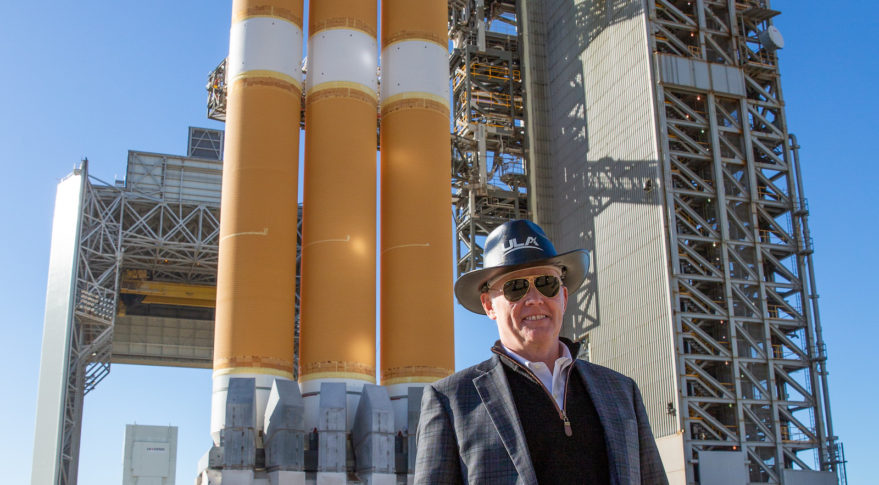
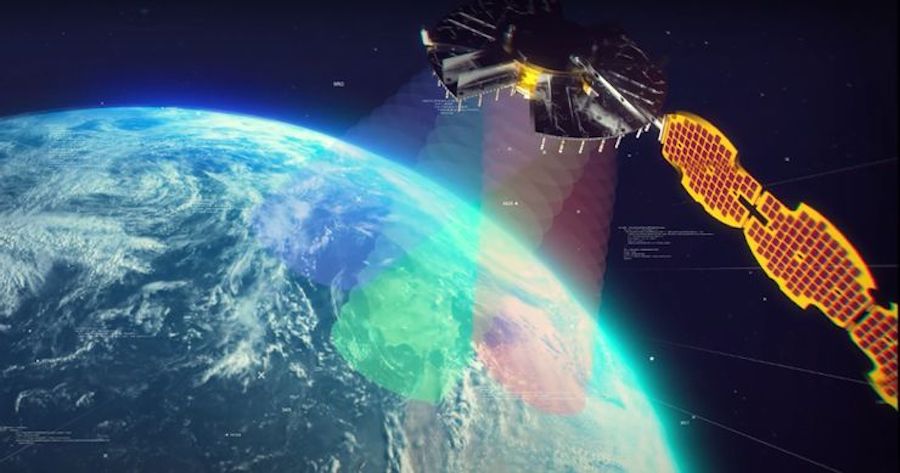
The Air Force Research Laboratory is planning a 2023 launch of the NTS-3 experimental navigation satellite.

Two missions—USSF-106 and USSF-87—are currently waiting in the wings, with payloads ready but no confirmed launch dates The post Space Force adjusts timeline as Vulcan’s national security launches slip to 2025 appeared first on SpaceNews.

"Constellation companies and government satellite operators are desperate."

The first mission for United Launch Alliance’s Vulcan rocket as part of the National Security Space Launch Phase 2 contract will be USSF-106. ULA began stacking the rocket that will support this mission in October 2024.
Note: Launch vehicle name is provisional. First orbital full version launch of the South Korean military small satellite launch vehicle, after 2 s…
Synthetic aperture radar Earth observation satellite for Japanese Earth imaging company iQPS.
Synthetic aperture radar satellite for Japanese Earth imaging company Synspective.
LOXSAT 1 is a demonstration satellite of a complete cryogenic oxygen fluid management system in orbit, developed by Eta Space and sponsored by NASA's…
Classified payload for the US National Reconnaissance Office.
Details TBD.
Details TBD.
A batch of 24 satellites for the Starlink mega-constellation - SpaceX's project for space-based Internet communication system.
A batch of 24 satellites for the Starlink mega-constellation - SpaceX's project for space-based Internet communication system.
13th test flight of the two-stage Starship launch vehicle. Second flight of Starship V3. For the first time, Starship will carry 20 V3 Starlink sa…


 View in Flightclub