Upcoming Spaceflight Launches
Filter by Agency, Locations or Vehicles
Show All Launches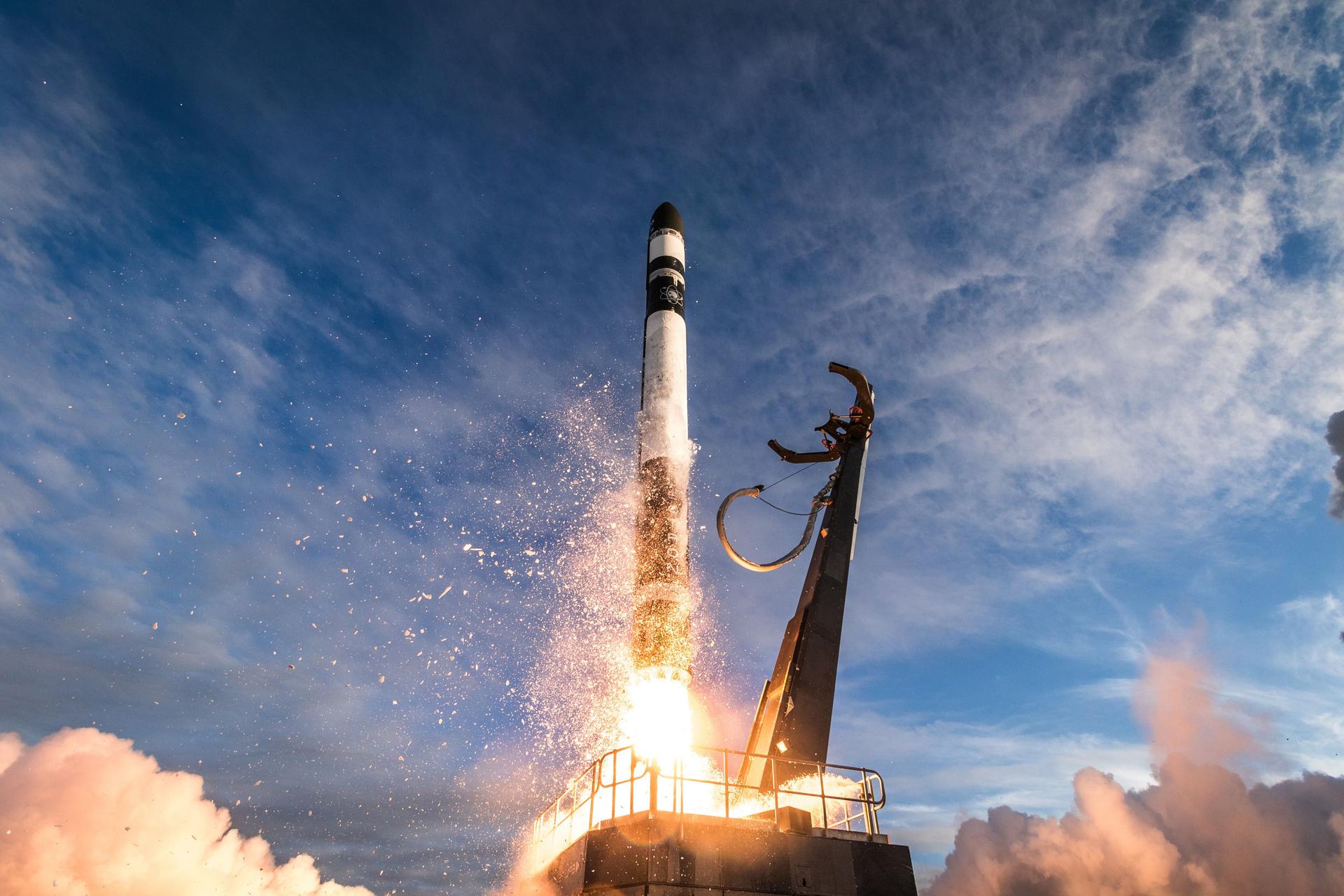
Electron | iQPS Launch 10
Rocket Lab | United States of AmericaRocket Lab Launch Complex 1, Mahia Peninsula, New Zealand
TBD December, 2026
Electron | iQPS Launch 11
Rocket Lab | United States of AmericaRocket Lab Launch Complex 1, Mahia Peninsula, New Zealand
TBD December, 2026
Electron | BlackSky Gen-3 6
Rocket Lab | United States of AmericaRocket Lab Launch Complex 1, Mahia Peninsula, New Zealand
TBD December, 2026
Electron | BlackSky Gen-3 7
Rocket Lab | United States of AmericaRocket Lab Launch Complex 1, Mahia Peninsula, New Zealand
TBD December, 2026
Electron | BlackSky Gen-3 8
Rocket Lab | United States of AmericaRocket Lab Launch Complex 1, Mahia Peninsula, New Zealand
TBD December, 2026
Electron | BlackSky Gen-3 9
Rocket Lab | United States of AmericaRocket Lab Launch Complex 1, Mahia Peninsula, New Zealand
TBD December, 2026
Electron | 6x HawkEye 360
Rocket Lab | United States of AmericaWallops Flight Facility, Virginia, USA
TBD December, 2026
Status: To Be Determined
Mission:
HawkEye 360 is a a space-based civil global intelligence satellite network using radio frequency (RF) technology to help monitor transportation across air, land and sea and assist with emergencies, and to provide civil SIGINT (Signal Intelligence) mission. The constellation of small satellites (named Hawk ) will collect information on specific radio signals worldwide to provide high-precision radio frequency mapping and analytics from Low Earth orbit (LEO).
Low Earth OrbitElectron | TSIS-2
Rocket Lab | United States of AmericaRocket Lab Launch Complex 1, Mahia Peninsula, New Zealand
TBD March, 2027
Status: To Be Determined
Mission:
The Total and Spectral Solar Irradiance Sensor 2 (TSIS-2) is a satellite designed by NASA to measure the Sun's energy input to Earth. TSIS-2 comprises two instruments, the Total Irradiance Monitor (TIM), and the spectral Irradiance Monitor (SIM). TIM measures total brightness and SIM measures spectral irradiance over a wavelength range that includes 96% of the energy in the solar spectrum. Both instruments are similar to those used for the TSIS-1 mission onboard the International Space Station.
Sun-Synchronous OrbitElectron | PolSIR-1
Rocket Lab | United States of AmericaRocket Lab Launch Complex 1, Mahia Peninsula, New Zealand
TBD June, 2027
Status: To Be Determined
Mission:
The PoISIR (Polarized Submillimeter Ice-cloud Radiometer) mission will help provide a better understanding of ice clouds that form at high altitudes throughout tropical and subtropical regions. Consisting of two small satellites, both of PoISIR’s 16U CubeSats have a scientific instrument designed to measure a specific spectrum of electromagnetic radiation, which will determine how the amount of ice in tropical clouds rises and falls during the day, as well as how the ice changes connect to larger storms. The instruments also will help determine how ice clouds affect sunlight and heat radiation throughout the day. The pair of CubeSats will fly in orbits separated by several hours to observe the pattern of cloud ice content changes over a day. This information will help researchers make more accurate weather predictions.
Low Earth OrbitElectron | PolSIR-2
Rocket Lab | United States of AmericaRocket Lab Launch Complex 1, Mahia Peninsula, New Zealand
TBD June, 2027
Status: To Be Determined
Mission:
The PoISIR (Polarized Submillimeter Ice-cloud Radiometer) mission will help provide a better understanding of ice clouds that form at high altitudes throughout tropical and subtropical regions. Consisting of two small satellites, both of PoISIR’s 16U CubeSats have a scientific instrument designed to measure a specific spectrum of electromagnetic radiation, which will determine how the amount of ice in tropical clouds rises and falls during the day, as well as how the ice changes connect to larger storms. The instruments also will help determine how ice clouds affect sunlight and heat radiation throughout the day. The pair of CubeSats will fly in orbits separated by several hours to observe the pattern of cloud ice content changes over a day. This information will help researchers make more accurate weather predictions.
Low Earth OrbitMir
Demo Flight
ADD Offshore launch platform - Sea LaunchNote: Launch vehicle name is provisional. First orbital full version launch of the South Korean military small satellite launch vehicle, after 2 s…
Electron
The Grain Goddess Provides (iQPS Launch 7)
Rocket Lab Launch Complex 1A - Rocket Lab Launch Complex 1, Mahia Peninsula, New ZealandSynthetic aperture radar Earth observation satellite for Japanese Earth imaging company iQPS.
Electron
StriX Launch 11
Unknown Pad - Rocket Lab Launch Complex 1, Mahia Peninsula, New ZealandSynthetic aperture radar satellite for Japanese Earth imaging company Synspective.
Electron
LOXSAT 1
Unknown Pad - Rocket Lab Launch Complex 1, Mahia Peninsula, New ZealandLOXSAT 1 is a demonstration satellite of a complete cryogenic oxygen fluid management system in orbit, developed by Eta Space and sponsored by NASA's…
Falcon 9
NROL-95
Space Launch Complex 40 - Cape Canaveral SFS, FL, USAClassified payload for the US National Reconnaissance Office.
Long March 6A
Unknown Payload
Launch Complex 9A - Taiyuan Satellite Launch Center, People's Republic of ChinaDetails TBD.
Long March 7A
Unknown Payload
201 - Wenchang Space Launch Site, People's Republic of ChinaDetails TBD.
Falcon 9
Starlink Group 17-52
Space Launch Complex 4E - Vandenberg SFB, CA, USAA batch of 24 satellites for the Starlink mega-constellation - SpaceX's project for space-based Internet communication system.
Falcon 9
Starlink Group 17-51
Space Launch Complex 4E - Vandenberg SFB, CA, USAA batch of 24 satellites for the Starlink mega-constellation - SpaceX's project for space-based Internet communication system.
Starship
Flight 13
Orbital Launch Pad 2 - SpaceX Starbase, TX, USA13th test flight of the two-stage Starship launch vehicle. Second flight of Starship V3. For the first time, Starship will carry 20 V3 Starlink sa…