Electron | Daughter Of The Stars (LEO-PNT Pathfinder A)
Launch Successful
L - -- : -- : -- : --
Instantaneous launch window.
Launch Window
-


Instantaneous launch window.
-
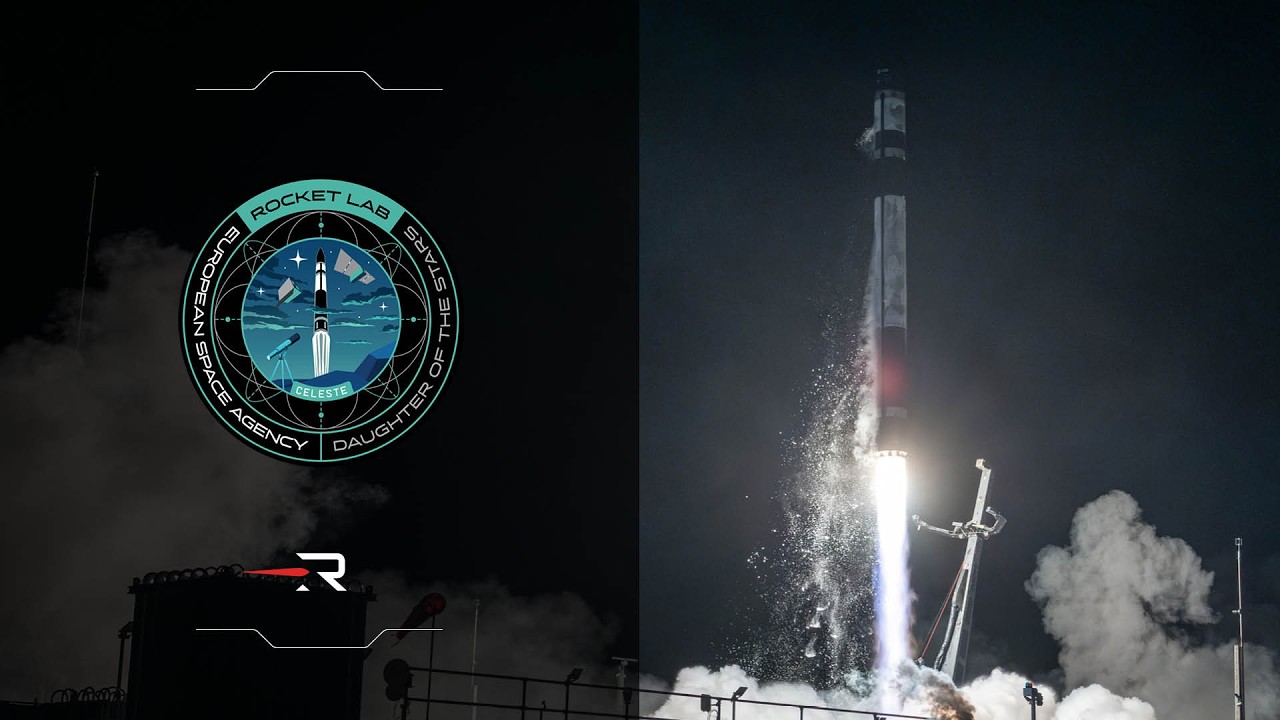

On 25 March, the first two satellites of the Celeste LEO-PNT in-orbit demonstration mission will lift off aboard Rocket Lab’s Electron rocket from the company’s Māhia Launch Complex in New Zealand. Celeste will play a pioneering role in elevating the future of Europe’s satellite navigation capabilities. As Europe’s first initiative …
The European Space Agency (ESA)'s LEO-PNT (Low Earth Orbit Positioning, Navigation and Timing) demonstrator mission will feature a 10-satellite constellation demonstration mission that will assess how a low Earth orbit fleet of satellites can work in combination with the Galileo and EGNOS constellations in higher orbits that provide Europe’s own global navigation system. This launch will lift 2 “Pathfinder A” satellites built by Thales Alenia Space and GMV to a 510 km altitude Low Earth Orbit.

New T-0.

Standing down due to weather conditions, new launch date TBD
Added mission name.
NET March 28 per new NOTAMs, to be confirmed.
GO for launch on March 28.
Electron is a two-stage orbital expendable launch vehicle (with an optional third stage) developed by the American aerospace company Rocket Lab. Electron is a small-lift launch vehicle designed to launch small satellites and cubesats to sun-synchronous orbit and low earth orbit. The Electron is the first orbital class rocket to use electric-pump-fed engines, powered by the 9 Rutherford engines on the first stage. It is also used as a suborbital testbed (called HASTE) for hypersonics research.
See DetailsRocket Lab is an American aerospace manufacturer with a wholly owned New Zealand subsidiary. The company develops lightweight, cost-effective commercial rocket launch services. The Electron Program was founded on the premise that small payloads such as CubeSats require dedicated small launch vehicles and flexibility not currently offered by traditional rocket systems. Its rocket, the Electron, is a light-weight rocket and is now operating commercially. The company is also producing a variety of spacecrafts and spacecrafts components.
INFO WIKI
Rocket Lab will launch a pair of European navigation technology demonstration satellites, as Europe again is forced to look outside the continent for launch services. The post Rocket Lab to launch European navigation tech demo satellites …

Following the announcement of the upcoming launch of LEO-PNT’s first satellites, ESA has now unveiled the name of the mission. Celeste, as it has been officially designated, will test the potential of a new, low Earth orbit layer of satell…

Watch the replay of the CELESTE pre-launch media briefing. The briefing covered the mission details of the ahead of the inaugural launch of ESA’s Celeste LEO-PNT in-orbit demonstration constellation. The first two satellites are scheduled …

On 25 March, the first two satellites of the Celeste LEO-PNT in-orbit demonstration mission will lift off aboard Rocket Lab’s Electron rocket from the company’s Māhia Launch Complex in New Zealand.

The United States, Russia, China, New Zealand, and Norway are all set to host launches… The post Launch Preview: Russia to debut Soyuz-5; Falcon 9 and Atlas V to launch internet satellites appeared first on NASASpaceFlight.com.
14th test flight of the two-stage Starship launch vehicle. 3rd flight of Starship V3 and the first Starship flight to deploy satellites (a group of S…
A classified mission for the United States Space Force. It is possibly a batch of classified LEO satellites based on SpaceX’s Starshield satellite bu…
Synthetic aperture radar satellite for Japanese Earth imaging company Synspective.
3 Chinese reconnaissance satellites of unknown purposes, officially reported as for "Electromagnetic environment probing".
A batch of 9 Low Earth Orbit communication satellites for the Chinese state owned SatNet constellation operated by the China Satellite Network Group.…
Share-ride of 9 commercial Earth observation and technology demonstration satellites to SSO, details TBD.
A batch of 27 satellites for the Starlink mega-constellation - SpaceX's project for space-based Internet communication system.
4 X-band synthetic-aperture radar Earth observation satellites for the Chinese Earth observation satellite company PIESAT.
Synthetic aperture radar satellite for Japanese Earth imaging company Synspective.
Note: Satellite serial number and Cosmos designation not confirmed. Glonass-K are the third generation of satellite design for GLONASS satellite n…