 Space Launch Now
Loading the details
EVA · International Space Station
NET 2021-06-20 12:00 UTC
Official · NASA · English
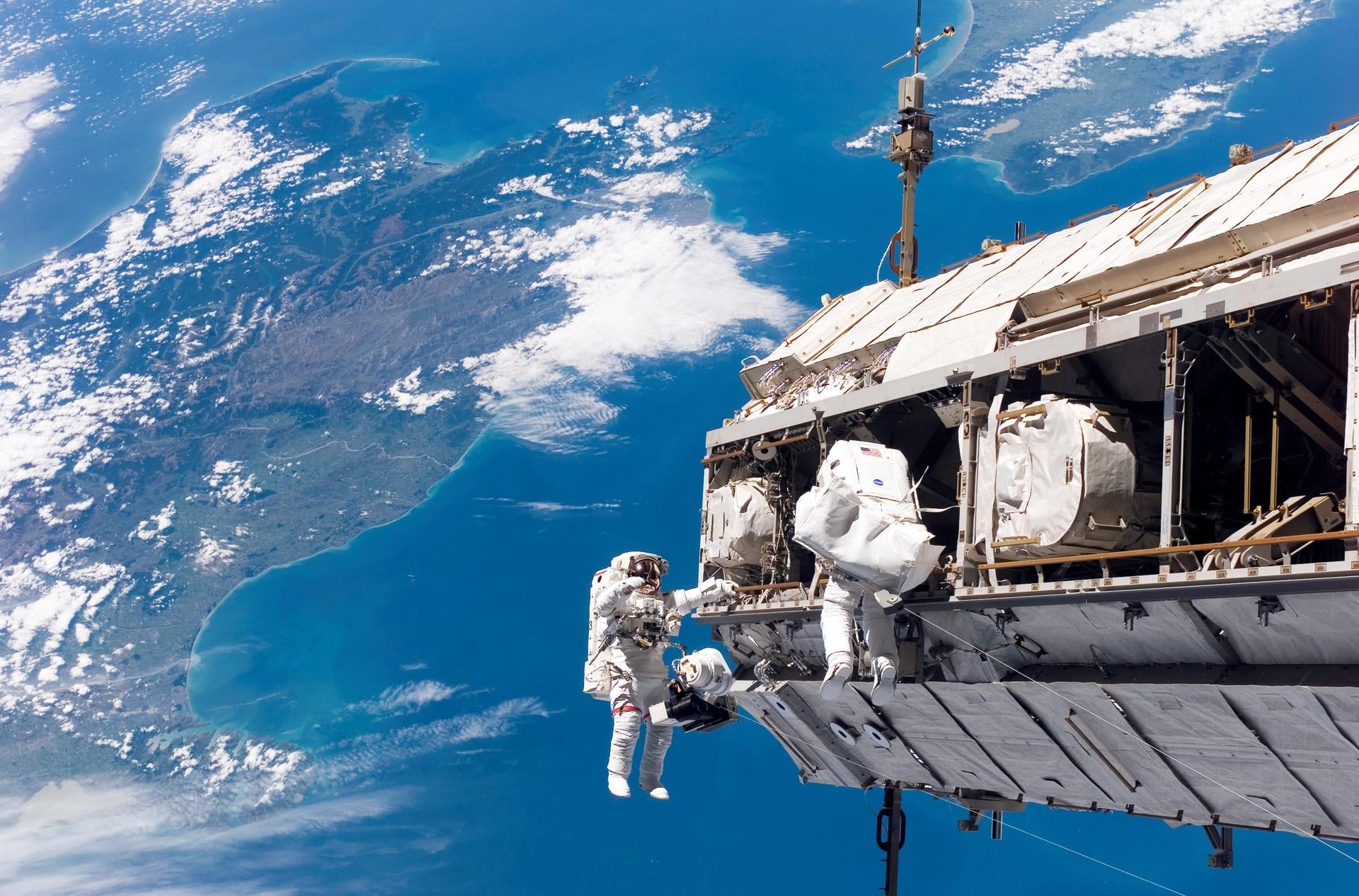
NASA astronaut Shane Kimbrough and ESA astronaut Thomas Pesquet will venture outside the orbiting outpost to continue installation of the new iROSA solar arrays.
First module
1998
launched
Mass
419.7t
Pressurized volume
931m³
Active · Government · Low Earth Orbit
The International Space Station (ISS) is a space station, or a habitable artificial satellite, in low Earth orbit. Its first component was launched into orbit in 1998, with the first long-term residents arriving in November 2000. It has been inhabited continuously since that date. The last pressurised module was fitted in 2011, and an experimental inflatable space habitat was added in 2016. The station is expected to operate until 2030. Development and assembly of the station continues, with several new elements scheduled for launch in 2019. The ISS is the largest human-made body in low Earth orbit and can often be seen with the naked eye from Earth. The ISS consists of pressurised habitation modules, structural trusses, solar arrays, radiators, docking ports, experiment bays and robotic arms. ISS components have been launched by Russian Proton and Soyuz rockets, and American Space Shuttles.
Space Launch Now for iOS and Android
A notification before this event starts, the countdown on your home screen and watch, and the webcast when it starts.


Spaceflight Now ·
Astronauts Thomas Pesquet and Shane Kimbrough floated outside the International Space Station Sunday to deploy and unroll a new solar array blanket after encountering spacesuit glitches and an interference issue during a previous excursion Wednesday.
NASASpaceflight ·
Two astronauts went outside the International Space Station (ISS) to complete installation of the first of six new Boeing-built solar arrays — part of a program to increase the station’s electrical power generation capacity as its science and research demands increase and future expansion plans continue.
NASA ·
Expedition 65 astronauts will conduct two spacewalks – one Wednesday, June 16, and the other Sunday, June 20 – to install new solar arrays to help power the International Space Station.