 Space Launch Now
Loading the details
Spacecraft Undocking · International Space Station
NET 2026-02-26 17:05 UTC
Official · NASA · English
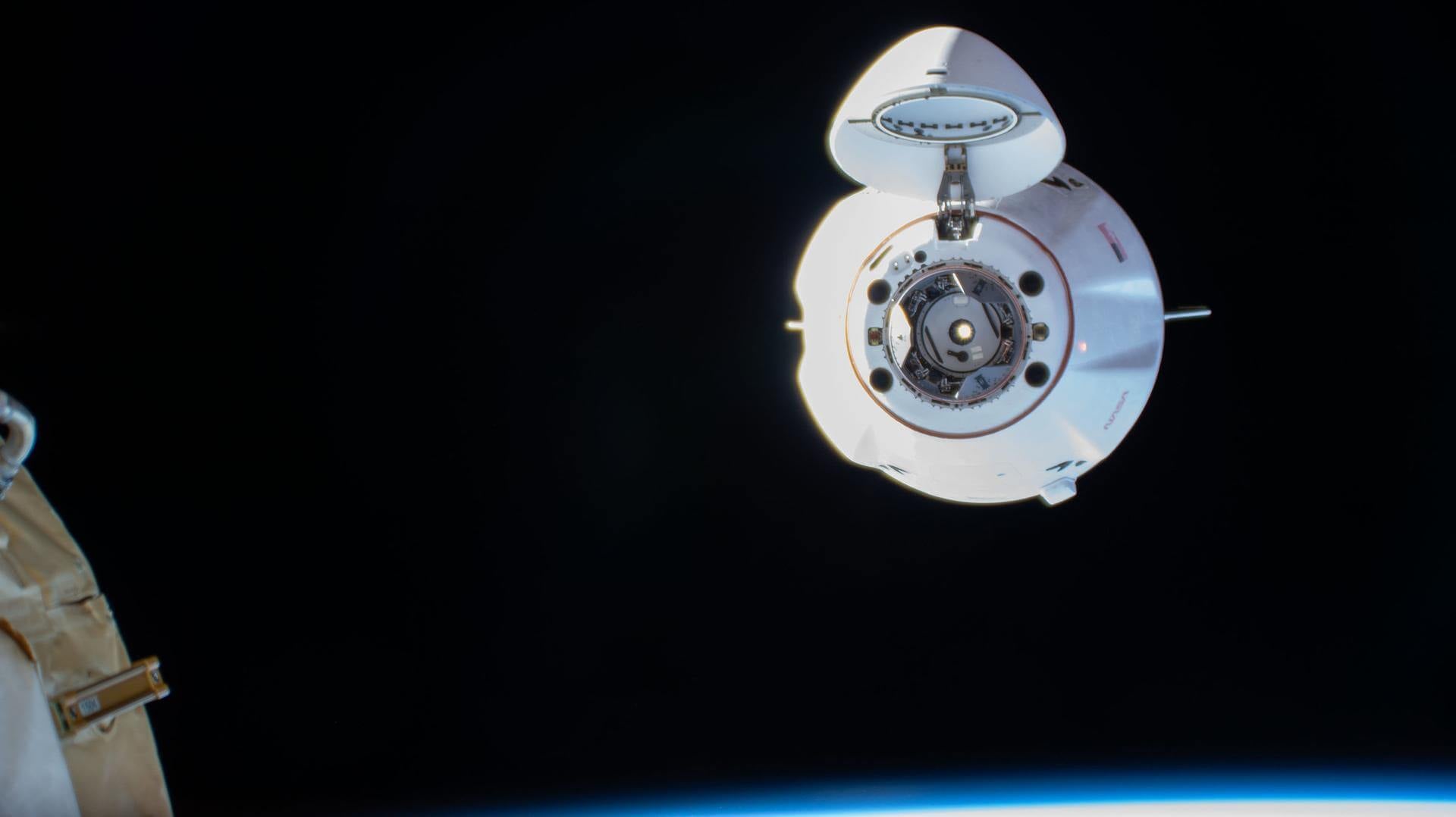
The SpaceX CRS-33 Dragon spacecraft will undock from the International Space Station ahead of its reentry, splashdown and recovery.
First module
1998
launched
Mass
419.7t
Pressurized volume
931m³
Active · Government · Low Earth Orbit
The International Space Station (ISS) is a space station, or a habitable artificial satellite, in low Earth orbit. Its first component was launched into orbit in 1998, with the first long-term residents arriving in November 2000. It has been inhabited continuously since that date. The last pressurised module was fitted in 2011, and an experimental inflatable space habitat was added in 2016. The station is expected to operate until 2030. Development and assembly of the station continues, with several new elements scheduled for launch in 2019. The ISS is the largest human-made body in low Earth orbit and can often be seen with the naked eye from Earth. The ISS consists of pressurised habitation modules, structural trusses, solar arrays, radiators, docking ports, experiment bays and robotic arms. ISS components have been launched by Russian Proton and Soyuz rockets, and American Space Shuttles.
Space Launch Now for iOS and Android
A notification before this event starts, the countdown on your home screen and watch, and the webcast when it starts.


ESA ·
This video was published on social media by ESA astronaut Sophie Adenot with the following caption:
NASA ·
NASA and its international partners will receive scientific research samples and hardware when a SpaceX Dragon spacecraft departs the International Space Station on Thursday, Feb. 26, and returns to Earth. Watch NASA’s live coverage of the undocking and departure of the agency’s 33rd SpaceX Commercial Resupply Services mission starting at 11:45 a.m. EST on NASA+,